The Budai / Buddha Blunder - Let's Get This Right
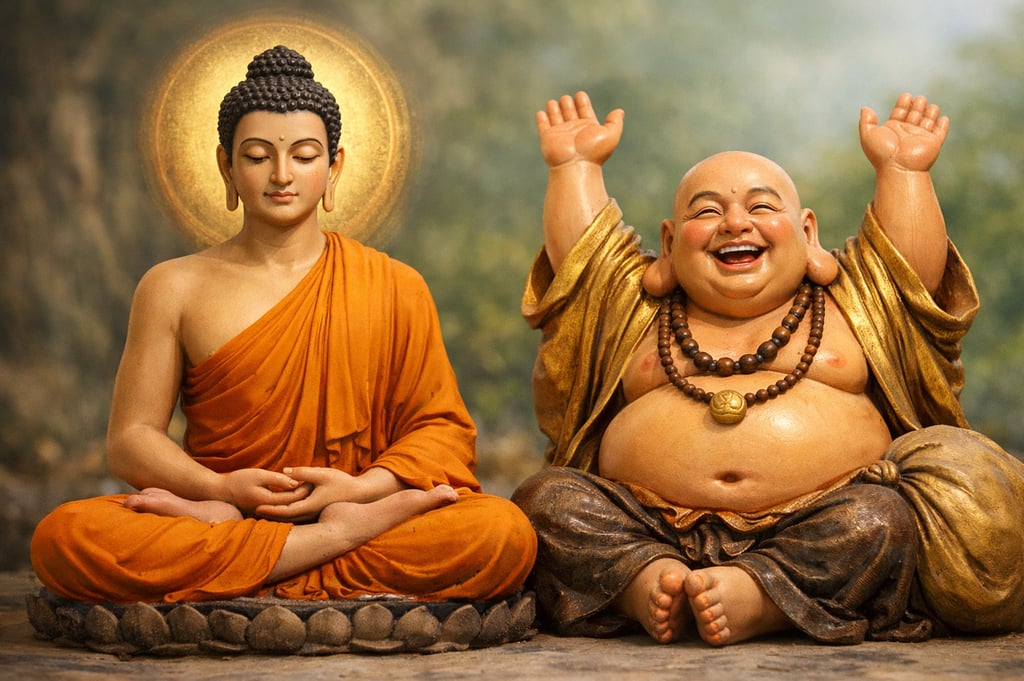
The Laughing Buddha isn’t the historical Buddha. Learn the differences between Buddha Siddhartha Gautama and Budai, why they’re confused, and what each truly represents.
RELIGIOUS LITERACYBUDDHISMEASTERN PHILOSOPHYCULTURAL MISCONCEPTION



What Budai Represents
Budai’s oversized belly isn’t about gluttony. It symbolizes abundance, forgiveness, and an ability to absorb the troubles of the world without resentment. His laughter reflects contentment rather than mockery. His raised hands often signify welcoming good fortune, spreading joy, or pushing away worry.
The sack he carries represents both material generosity and spiritual detachment. He gives freely because he’s not attached to what he carries. Sometimes, statues show him tossing sweets to children, reinforcing his role as a bringer of happiness rather than doctrine.
This is why Budai statues appear across Buddhist, Taoist, and even Shinto settings throughout East Asia. He’s a symbol of prosperity, ease, and joyful presence, not a teacher of formal doctrine.



G8WAY intellectual property found herein is branded as such and most graphic interchange formats along with all links lead to external businesses not owned or operated by G8WAY. If you own any image included here and wish to request its removal or proper attribution, please contact admin@g8way.online or coolcat@g8wayonline and you'll get a response as promptly as possible. Please note: a page’s presence in G8WAY does not imply it is complete. Each entry is a living document that may be subjected to editorial corrections and/or additions. G8WAY may earn a commission when users make a purchase through links posted throughout this site. Information on WWW.G8WAY.ONLINE is opinionative and for entertainment purposes only and should not be considered professional advice. Thank You for Visiting! G8WAY.ONLINE ©2026 All rights reserved.