Let’s be honest from the jump. How does anyone seriously entertain the idea of mermaids as anything more than myth when we are already surrounded by documented, scientifically verified phenomena that most people barely acknowledge? We have bioluminescent waters on just about every continent glowing naturally. We have the Mariana Trench—a depth so extreme that humans know more about the surface of the moon than what lives down there. We have deep-sea species that look alien by every definition of the word, entire ecosystems thriving without sunlight, and vast stretches of ocean still unmapped and unexplored. Add to that the unresolved questions around Atlantis, the long-debated Firmament, and the quiet acknowledgment by scientists that undiscovered life forms absolutely exist beneath the waves—and suddenly the obsession with mermaids starts to look less like curiosity and more like distraction. Still, for shits and giggles—and because it wouldn’t be G8WAY if we didn’t cover it at least once—we’re going to break down the mythology, the lore, and the speculation surrounding mermaids and mermen, while keeping our feet firmly planted in reality.
Ancient Folklore and the Real Origins of Merfolk
Across cultures, stories of mermaids and mermen stretch back thousands of years. In folklore, these beings were often seen as powerful, sometimes dangerous spirits of the water, part human and part fish. European traditions describe mermaids as magical beings with prophetic powers who could bring both good fortune and disaster, sometimes even luring sailors to their doom. Mermen, in contrast, were often portrayed as wilder or uglier than their female counterparts. (Encyclopedia Britannica)
One explanation for these myths may come from sailors encountering marine mammals like manatees and dugongs, whose humanlike shapes in the water could easily be misinterpreted from a distance. Over centuries, such sightings spiraled into stories passed down through generations.
Folklore from Britain and Ireland includes tales in which mermaids foretell disaster or interact with humans in eerie ways. Some legends even suggest mermaids could swim up rivers into freshwater lakes, extending the myth beyond the open seas. (Wikipedia)
Looking Different: Beyond the Pretty Mermaid Image
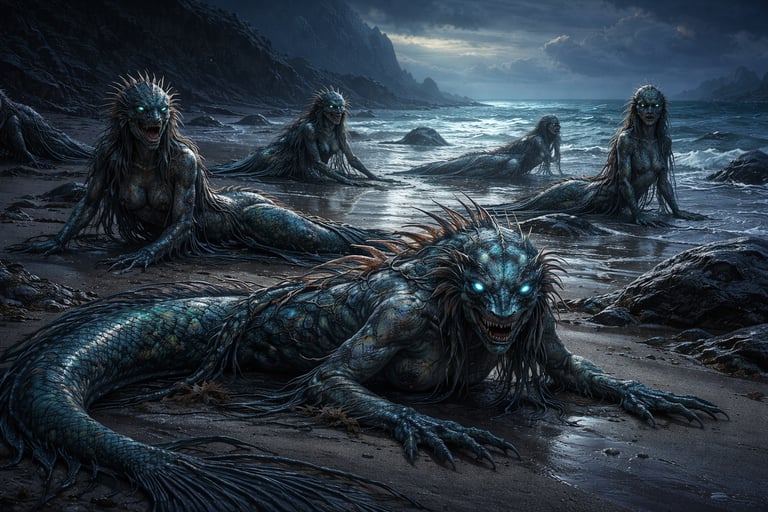
While pop culture has embraced beautiful mermaids, some old accounts and artistic representations suggest more bizarre, truly aquatic appearances. These descriptions emphasize fishlike bodies, unusual appendages, and less human-like features—traits you’d expect from creatures adapted to life beneath the waves.
It’s important to remember that no verifiable evidence exists for any such creatures. All accounts—whether from sailors’ tales or ancient art—are anecdotal or symbolic, rather than scientific.
Sea Gods: Poseidon and Neptune in Mythology
Two powerful figures often associated with sea lore are Poseidon in Greek mythology and Neptune in Roman belief.
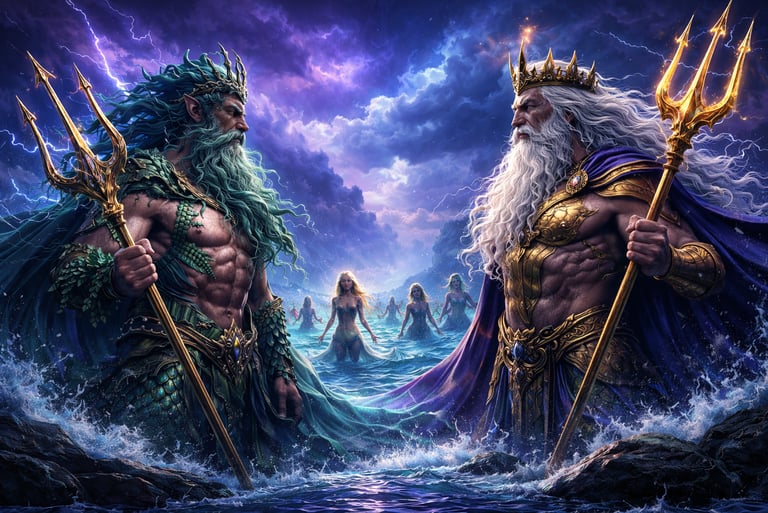
Poseidon was one of the principal gods of ancient Greece, ruling over the sea, storms, and earthquakes. He wielded the iconic trident—a symbol later adopted into Neptune’s imagery—and was revered as the divine force behind the ocean’s unpredictable behavior. Poseidon’s family included Amphitrite, a sea-goddess who became his wife, and their son Triton, a merman-like figure often depicted blowing a conch shell. (Encyclopedia Britannica)
Neptune, his Roman counterpart, originally began as a god of fresh water before becoming associated with the sea itself. Like Poseidon, he was shown carrying a trident and was believed to have the power to calm or stir the waters. Romans celebrated him with festivals and sailors invoked his favor for safe voyages and abundant catches. (History Cooperative)
Despite these divine beings being tied to the ocean realm, neither Poseidon nor Neptune is literally depicted as a mermaid or merman in classical sources. Instead, they are rulers over waters and marine creatures, inspiring later associations between gods and merfolk in art and storytelling.
Atlantis: Myth and Speculation, Not Evidence
Another element of sea mythology is Atlantis, a legendary island first mentioned by the Greek philosopher Plato in his dialogues Timaeus and Critias. According to the story, Atlantis was a powerful naval civilization that sank into the Atlantic Ocean in a single day and night due to earthquakes and floods. (Encyclopedia Britannica)
Modern historians generally regard Atlantis as a myth or allegory for hubris and downfall. However, some theories suggest real events could have influenced the tale—such as the volcanic collapse of the Minoan civilization on Crete and Thera around 1500 BCE. Still, there’s no evidence linking Atlantis to actual geography or civilizations.
Why the Allure?
Even without real proof, mermaids and related sea lore endure because the ocean itself is mysterious. More than 80 percent of the world’s oceans remain unexplored, hiding ecosystems and species humans have never seen. That unknown fuels imagination and makes it easy to leap to fantastical explanations.
It's human nature is to fill in gaps for understanding stories with beliefs, or myths—whether about gods, monsters, or wondered-about beings beneath the waves.
Mermaid Culture Today
The fascination with mermaids isn’t confined to myths. Each year, communities celebrate their allure and fantasy. For example, the Coney Island Mermaid Parade brings together colorful costumes, joyous revelry, and a playful embrace of mermaid imagery by people from all walks of life. These celebrations reflect a shared cultural curiosity rather than evidence of actual sea creatures. To date, the author's personal accounts can attest to the Mermaid Parade as being nothing more than the Village Halloween Parade, in aquatic form, in sunshine on the boardwalk in Coney Island. Just people having fun in the sun as ideas of "Mermaids" flood Stillwell all glitzed up in pastels, aqua-green & blue, with glittery pasties and lewd action. Eh, at least the parade is real.
Final Thought: Mystery Versus Reality
From ancient sea-gods to eerie mermaid tales and the legend of Atlantis, stories of the deep have shaped human culture for centuries. They remind us how much we still don’t know about the oceans and how storytelling helps us grapple with that unknown. But at the end of the day, the ocean’s mysteries are real—the monsters aren’t. Despite centuries of speculation, there is no substantiated proof of Mermaids or Mermen or Sirens or anything of that nature. They remain part of mythology, metaphor, and the endless human love affair with the sea’s deep darkness.

G8WAY intellectual property found herein is branded as such and most graphic interchange formats along with all links lead to external businesses not owned or operated by G8WAY. If you own any image included here and wish to request its removal or proper attribution, please contact admin@g8way.online or coolcat@g8wayonline and you'll get a response as promptly as possible. Please note: a page’s presence in G8WAY does not imply it is complete. Each entry is a living document that may be subjected to editorial corrections and/or additions. G8WAY may earn a commission when users make a purchase through links posted throughout this site. Information on WWW.G8WAY.ONLINE is opinionative and for entertainment purposes only and should not be considered professional advice. Thank You for Visiting! G8WAY.ONLINE ©2026 All rights reserved.